End-to-end encryption
Data in transit uses TLS 1.3 encryption. PHI at rest is secured with AES-256 at the infrastructure level, ensuring complete safety for all your sensitive patient records.
Protect patient data with HIPAA-compliant websites and secure digital platforms designed to safeguard sensitive health information and meet regulatory requirements.
Encryption & Access Layer
Audit & Compliance Verification
BAA Signed
Before Data is Handled
AES-256 Standard
End-to-End Encrypted
Why HIPAA Matters
HIPAA compliance protects patient data, builds trust, and ensures your healthcare website meets HIPAA security and privacy standards.
The Office for Civil Rights (OCR) actively investigates website infrastructure, tracking pixels, and unencrypted form submissions.
Per violation, with annual caps reaching $2.06 Million. Criminal violations carry prison terms.
When someone submits a booking request, fills out a clinical intake form, or logs into a patient portal on your website, they are placing trust in your organisation to handle their most sensitive personal data responsibly. Federal law reinforces that expectation.
Medical history, insurance details, and appointment records exposed without authorisation.
HIPAA enforcement increasingly reaches executives, compliance officers, and organisations directly.
Federal investigations, mandatory HHS breach notifications, and lasting reputational damage.
HIPAA compliance is not a feature you add to a healthcare website.
It is the foundation on which a compliant website must be built - and it begins before the first line of code is written.
Plan Your HIPAA BuildCommon Failures
We audit dozens of healthcare sites. These are the five most common ways we see them violating HIPAA without realizing it.
Installing Meta Pixel, Google Analytics, or TikTok trackers on patient portals or appointment pages can expose PHI to third parties, creating serious HIPAA compliance risks.
How we solve this
We audit every third-party script before launch. Tracking pixels are removed from or blocked on any page that may touch PHI. We use server-side analytics where possible.
Sending patient intake forms through unencrypted email can expose sensitive PHI and create serious HIPAA security and compliance risks.
How we solve this
We route all form submissions through encrypted pipelines. Patient data is never sent via plain-text email - it goes into secure, access-controlled systems only.
Using consumer-grade chat, scheduling, or hosting tools without a signed BAA can expose sensitive PHI and create serious HIPAA compliance risks.
How we solve this
We sign a BAA before any project work involving PHI begins. We also audit every vendor and third-party tool to ensure a BAA is in place across the whole stack.
Sharing login credentials, using weak passwords, or failing to implement role-based access allows unauthorized access to PHI - a common audit failure.
How we solve this
We implement RBAC, MFA, and automatic session timeouts on every system that handles PHI. Access is scoped to the minimum necessary for each role.
Storing patient records, intake submissions, or appointment data in unencrypted databases is a direct violation of HIPAA's Technical Safeguard requirements.
How we solve this
All PHI is encrypted at rest using AES-256 and in transit using TLS 1.3. We configure encryption at the infrastructure level, not just the application layer.
HIPAA requires healthcare websites to protect patient data with essential security measures that ensure privacy, compliance, and trust.
Develop security policies, define user responsibilities, perform regular risk assessments, and manage access permissions through documented procedures.
Protect healthcare systems with encryption, secure authentication, role-based access control, audit logging, secure APIs, and continuous monitoring.
Protect servers, devices, workstations, and backup systems through controlled physical access and secure infrastructure against unauthorized threats effectively.
These are not optional add-ons. They are the technical safeguards required under the HIPAA Security Rule, implemented by default on every US healthcare website and platform we build.
Data in transit uses TLS 1.3 encryption. PHI at rest is secured with AES-256 at the infrastructure level, ensuring complete safety for all your sensitive patient records.
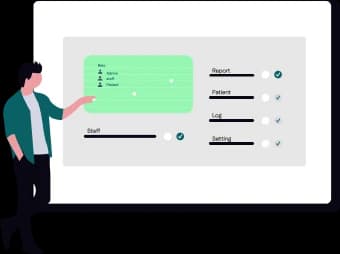
Access is limited to the minimum necessary for each role. This prevents unauthorized ePHI exposure and ensures strict privacy across your entire healthcare platform and database.

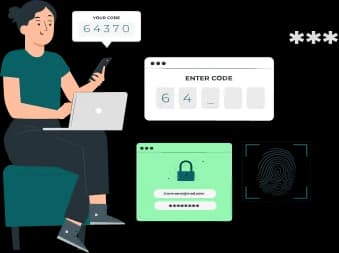
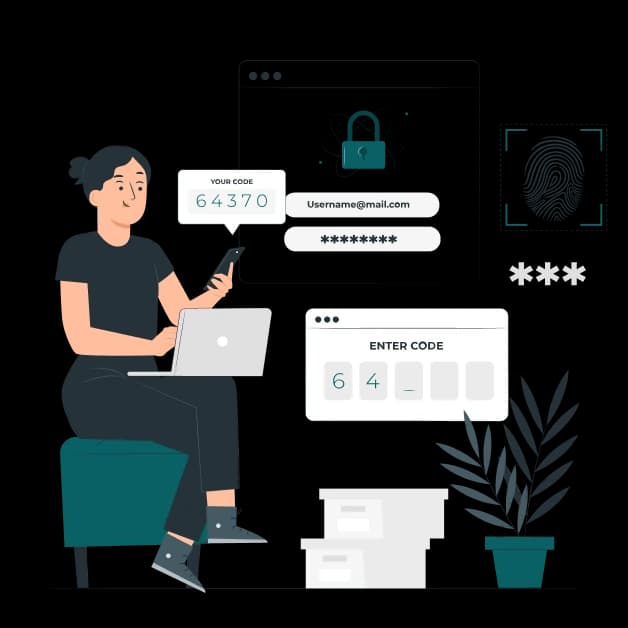
Systems touching PHI require mandatory MFA. Time-limited sessions & auto-logout ensure stolen passwords alone cannot grant access to records or compromise patient privacy at any level.
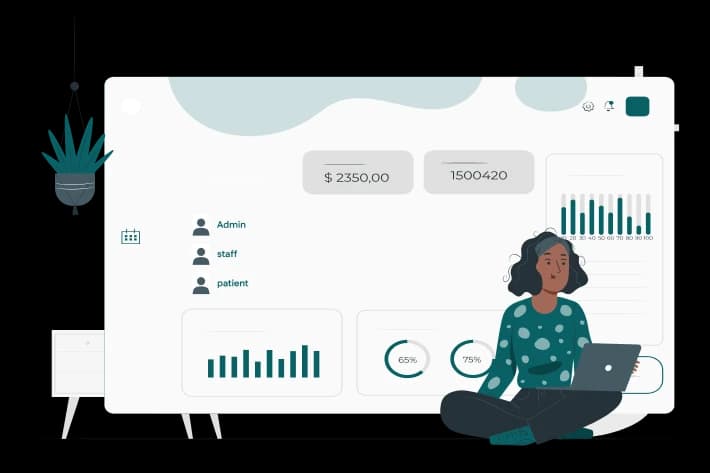
Track user activity and system events with detailed audit logs to improve accountability, support HIPAA compliance, and protect sensitive patient information across your entire platform.
Protect healthcare data with automated backups and monitoring. Our solutions ensure business continuity and data availability under HIPAA Rules for every healthcare project.

Secure all devices against malware and unauthorized access. We safeguard every access point to protect patient data and keep your healthcare infrastructure fully protected.
Share medical documents securely using encrypted transfers and controlled access. Our solutions protect data at every stage, ensuring files reach only intended recipients.
Monitor security risks and vulnerabilities to strengthen your website. Proactive 24/7 threat detection provides real-time alerts to prevent data breaches and ensure safety.
HIPAA compliance can be complex. We simplify the process with secure, scalable solutions that protect patient data and support regulatory compliance.
Lack of employee awareness
Human vectors require systematic defenses. This module deploys real-time simulated phishing paths, multi-tenant credential analytics, and compliance testing workflows directly to employee interfaces.
Some of the most consequential HIPAA enforcement in recent years has targeted website-level issues specifically, not just internal record systems.
0
Total HHS settlements in 2025, the second-highest annual total on record.
HIPAA Journal, 2025 Data Breach Report
0
Healthcare breaches reported to OCR, affecting over 935 million people.
HIPAA Journal / OCR Breach Portal
#0
Risk analysis failures are the most cited official HIPAA violation in recent years.
HHS OCR Enforcement Data
0 days
Average time to detect healthcare breaches—the longest of any industry.
IBM Cost of a Data Breach Report
Use this 10-point checklist to evaluate your current website. A single 'No' means your site is likely violating the Security Rule.
End-to-end encryption for all patient data collection forms.
Secure 'at-rest' encryption for all form submission databases.
Automatic session timeouts for inactive patients and admins.
Immutable audit logs tracking every instance of ePHI access.
Strict Role-Based Access Control (RBAC) for all sensitive data.
Signed Business Associate Agreement (BAA) with your host.
Signed BAA with your web development and maintenance agency.
Signed BAAs for all third-party widgets and integrated tools.
No unauthorized tracking pixels on patient-facing web pages.
Annual documented risk analysis of your website infrastructure.
Addressing common misconceptions about certifications, platforms, and enforcement.
No. There is no official government HIPAA certification. The Department of Health and Human Services (HHS) does not endorse or certify any software, service, or vendor. Any 'HIPAA Certified' badge you see is a marketing creation by a private company. Compliance is an ongoing operational state, not a one-time certificate.
Let's discuss your goals and show you how we can build a secure, accessible, and high-performing healthcare website.