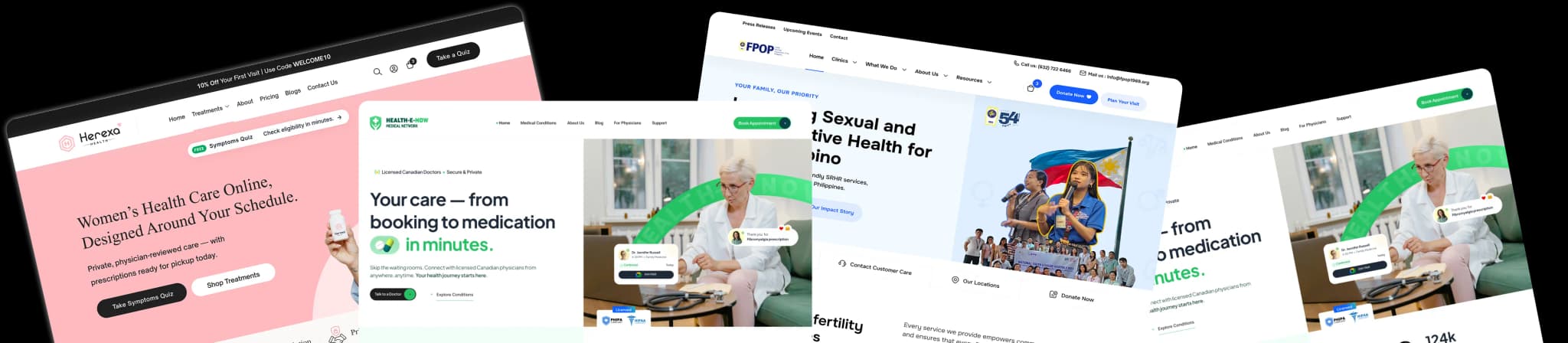
Healthcare Landing Page Best Practices: Convert Paid Traffic Without Creating PHI Risk
Build healthcare landing pages that turn paid traffic into meaningful enquiries without exposing sensitive health information. Learn how to design forms, follow advertising policies, measure conversions, improve mobile performance, and prepare your page for launch.
HIPAA Compliance
Reviewed and updated for the latest HIPAA Compliance developments and related healthcare compliance standards.
Paid healthcare campaigns can attract qualified visitors but still produce few appointment requests. A poorly designed form, unclear trust signals, or slow mobile experience can waste advertising spend before a patient contacts your organization.
Healthcare landing page best practices help you connect each campaign to a relevant page while reducing privacy risks. LocalIQ reports an average healthcare search ad conversion rate of 8.09%, with substantial differences between specialties. Addiction Recovery averaged 0.50%, while Dermatology averaged 25.33%.
These figures show why a single conversion target cannot guide every healthcare campaign. Your landing page strategy should reflect the specialty, the patient's intent, the action you measure, and the sensitivity of the information you collect.
What a high-converting healthcare landing page needs
Medical landing page conversion depends on matching the visitor's expectations with a clear next step. A page should answer the patient's immediate questions without overwhelming them with content or unnecessary form fields.
One page per ad intent, with message match
Match the landing page headline, supporting copy, and primary call to action to the advertisement. Someone clicking an ad for a dermatology appointment should not land on a generic page covering every clinical service.
Create separate pages when campaigns target different specialties, locations, or patient actions. Keep the promise consistent from the advertisement through the confirmation message.
For organizations planning new campaign pages, healthcare website design and development should account for conversion goals and privacy requirements from the beginning.
Above the fold: credentials, location, insurance, one primary CTA, and click-to-call
Help visitors determine whether your service meets their needs before they scroll. Display relevant clinician credentials, service locations, accepted insurance information where applicable, and one prominent primary call to action.
For mobile visitors, make the phone number actionable. Keep secondary links available without allowing them to compete with the main appointment or enquiry action.
Accurate trust signals, and why a "HIPAA compliant" badge is a risky claim
Use verifiable credentials, clear privacy information, accurate service descriptions, and recognizable contact details to establish trust. Avoid displaying a generic "HIPAA compliant" badge as proof of compliance.
The US Department of Health and Human Services does not certify websites or products as HIPAA compliant. Explain the safeguards your organization actually uses, such as appropriate vendor agreements, access controls, encryption, and reviewed data flows.
Setting a conversion target by specialty, not by a generic average
LocalIQ reports an average healthcare search ad conversion rate of 8.09%, but its specialty figures range from 0.50% for Addiction Recovery to 25.33% for Dermatology. These results come from LocalIQ's client data and are not universal landing page benchmarks.
Set targets according to your specialty, location, campaign intent, and definition of conversion. A form submission is not necessarily equivalent to a qualified enquiry or a booked appointment.
Track meaningful outcomes separately so you can distinguish low-quality submissions from visitors who progress toward scheduling.
Resolve landing page risks before launch
Paid campaigns can create privacy and performance problems when the landing page, form, and tracking configuration are planned separately. Qrolic Health can help your team assess the technical requirements before expanding campaign spend.
Talk to our healthcare web team →Build the form: collect the minimum and protect what you collect
A short form can reduce friction, but fewer fields do not automatically make it safe. Your team must consider what each field reveals, where submissions go, who can access them, and which vendors process the information.
Why name, phone, and a health interest can be PHI-sensitive
A person's identity combined with information about a health concern may reveal sensitive health information. Treat that combination cautiously, particularly when forms connect to appointment systems, patient records, analytics tools, or advertising platforms.
The precise HIPAA analysis depends on the organization, the information, and how the data is handled. Ask your privacy or legal team to confirm the requirements for your specific workflow.
Fields to keep and fields to avoid
Start with the information scheduling genuinely requires. Depending on the service, a basic enquiry form may need:
- Name and a preferred contact method.
- A broad service category, where necessary.
- Preferred appointment timing, if relevant.
- A consent or privacy acknowledgement where appropriate.
Avoid requesting detailed symptoms, diagnoses, medication histories, insurance identifiers, or other sensitive details unless the workflow requires them and suitable safeguards are in place.
Replace open-ended medical questions with limited service categories when that meets the operational need. Do not treat a dropdown as automatically safe, because the selected value can still reveal health information.
A BAA-covered form tool, encryption, and where submissions land
If a vendor handles protected health information on behalf of a covered entity or business associate, determine whether a Business Associate Agreement is required and whether the vendor will sign one. A BAA alone does not make an entire workflow compliant.
Review encryption in transit and at rest, access permissions, retention, notifications, integrations, and submission storage. Check whether entries also appear in email notifications, CRM records, logs, backups, or third-party automation tools.
For a more detailed implementation review, see our guide to HIPAA compliant contact forms. Your form's security depends on the complete data flow, not just the form builder.
Did You Know ?
Healthcare landing page best practices start with one page per ad intent, a short form collecting only what scheduling needs, accurate trust signals, and fast mobile loading. Compliance adds BAA-covered form tools, no condition details in URLs or tracking events, and no Google Ads remarketing lists built from condition pages.
Ad platform rules that shape the page and the audience
Google's personalized advertising policy treats health as a sensitive category and restricts advertiser-curated audiences for health-related content. Campaign planning must account for those limits before selecting remarketing tactics or building audience segments.
Google Ads limits on advertiser-curated audiences for health
When promoting health content, advertisers cannot use certain advertiser-curated audiences, including Customer Match and remarketing segments, under Google's sensitive-category restrictions. Lookalike segments and audience expansion may also be restricted in relevant contexts.
Keywords and predefined Google audiences can still be available. Discovery and Demand Gen campaigns may require particular attention because their audience settings can rely on advertiser-curated audiences.
Check the current Google Ads personalized advertising policy for sensitive health categories before selecting campaign types or targeting options. Do not assume a setting permitted for another industry will also be allowed for healthcare.
Ad copy and page copy that do not imply knowledge of a user's condition
Avoid wording that suggests your organization knows a visitor's diagnosis, medical history, or personal health circumstances. Keep claims factual and focus on the service being offered rather than making assumptions about the person seeing the advertisement.
For example, describe the availability of mental health services instead of directly asserting that the viewer has a particular condition. Ensure the landing page supports the same service claims as the advertisement.
Why you should check each platform's own health policy before launch
Advertising restrictions vary by platform, campaign type, targeting method, and the nature of the service. A compliant Google Ads configuration does not establish that your Meta, analytics, or other advertising setup follows its own rules.
Review the destination URL, audience settings, conversion configuration, and data-sharing permissions together. Record the approved configuration so later campaign changes do not introduce unreviewed targeting or tracking methods.
Tracking and conversion measurement without leaking PHI
Healthcare lead generation landing pages need useful measurement without unnecessarily exposing sensitive information. Your analytics plan should identify what leaves the page, which recipients receive it, and whether each transfer is appropriate for the data involved.
Where the OCR tracking bulletin stands after the 2024 ruling
On June 20, 2024, a court partly vacated the HHS Office for Civil Rights' online tracking bulletin in American Hospital Association v. Becerra. The ruling removed the position that an IP address combined with a visit to an unauthenticated public page about health conditions or providers automatically triggers HIPAA.
HHS's appeal was dismissed in September 2024. The ruling did not vacate the entire bulletin, including its treatment of authenticated pages.
Consequently, do not interpret the decision as permission to send patient information to advertising platforms. Review each tracking technology against the information collected, the context, and applicable legal requirements.
FTC enforcement over health data sent to ad platforms
The Federal Trade Commission has taken action against companies outside HIPAA's coverage over health information shared with advertising platforms. In February 2023, the FTC took action against GoodRx, involving a $1.5 million civil penalty and its first Health Breach Notification Rule case.
The BetterHelp matter resulted in $7.8 million in consumer refunds under a final order in July 2023. Both cases involved health information shared with advertising platforms through pixels or similar technologies.
The amended FTC Health Breach Notification Rule took effect on July 29, 2024. Its requirements concern entities outside HIPAA's coverage, so healthcare organizations must distinguish FTC obligations from HIPAA duties rather than treating the frameworks as interchangeable.
These cases demonstrate why organizations should review data flows before enabling advertising tags. Ask privacy counsel to determine which rules apply to your organization and its vendors.
Server-side events, generic thank-you URLs, and no condition names in parameters
Server-side conversion tracking can help limit the information sent to advertising platforms, but it does not automatically make a data transfer safe or compliant. Review the fields, event payloads, identifiers, recipients, and applicable permissions before implementation.
Use generic thank-you URLs instead of paths that reveal a diagnosis or treatment. Keep condition names out of URL parameters, event names, page titles, and campaign conversion labels.
For example, an event named `appointment_request_complete` reveals less than one that identifies a specific treatment. Generic naming alone is not enough if the event still sends identifiable health information.
A practical review should include browser tags, server-side integrations, form notifications, and analytics destinations. Test the full submission journey, including confirmation pages and failed submissions, before activating paid traffic.
During implementation, review the complete path from advertisement click to form submission and confirmation. A page can appear safe in the browser while hidden tags, URL parameters, or server-side integrations transmit sensitive details elsewhere.
Speed, mobile, and accessibility for ad traffic
Google's Core Web Vitals define good performance thresholds at the 75th percentile of page loads: Largest Contentful Paint at or under 2.5 seconds, Interaction to Next Paint at or under 200 milliseconds, and Cumulative Layout Shift at or under 0.1.
These thresholds provide measurable performance targets for healthcare landing pages. Poor mobile performance can waste paid clicks when visitors leave before understanding the service or completing an enquiry.
Core Web Vitals thresholds your page should meet
Measure real-user performance where possible and investigate problems by device type and page template. Large images, excessive scripts, third-party tags, and slow form integrations can undermine the experience even when the page looks fast on a developer's computer.
Test the landing page with its actual campaign tags enabled. Removing every tracking script may improve a test score but does not validate the performance of the page visitors will actually receive.
Mobile form design and click-to-call
Design forms for small screens with readable labels, suitable input types, clear spacing, and visible submission feedback. Keep the primary action easy to reach and avoid making users zoom or scroll unnecessarily to complete basic fields.
Test the entire journey on a real phone, including validation errors, telephone links, keyboard behavior, and the confirmation page. Confirm that the form remains usable when the device has a slower connection.
Accessible forms: labels, error messages, and keyboard focus
Use programmatically associated labels, clear instructions, descriptive error messages, and visible keyboard focus. Do not communicate errors through color alone, and ensure users can understand what needs correction without losing their entered information.
WCAG 2.2 AA is a useful target for planning accessible healthcare experiences. Validate the page with keyboard testing, automated checks, and manual review rather than relying on a single accessibility score.
Paid vs organic pages, and a launch checklist
Paid landing pages and organic service pages serve different purposes. A paid page can focus on one campaign action, while an organic service page usually needs broader information to address search intent and support internal navigation.
When to noindex a PPC page and when to build an organic service page
Consider `noindex` when a campaign-specific page adds little independent search value or duplicates existing content. Confirm the indexing directives before launch, and do not block crawling in a way that prevents search engines from seeing a `noindex` directive.
Build an organic service page when users need comprehensive information about a specialty, location, or service. Use canonical tags only when they accurately reflect the intended preferred URL, not as a substitute for deciding which page should rank.
A paid page should not automatically be excluded from organic search simply because it supports advertising. Make the decision based on search intent, content quality, duplication, and the site's overall information architecture.
For teams coordinating campaign pages with broader search visibility, Qrolic Health provides healthcare SEO services.
A launch checklist
Before sending paid traffic to a healthcare landing page, confirm the following:
- The headline and primary CTA match the advertisement.
- Service information, credentials, location, and insurance details are accurate.
- Form fields collect only the information needed for the intended workflow.
- Required BAAs and vendor reviews are complete.
- Encryption, permissions, retention, and submission destinations have been reviewed.
- Tracking tags and server-side events have been checked for sensitive data exposure.
- URLs, event names, and parameters do not unnecessarily reveal health information.
- Audience targeting follows the current advertising platform policies.
- Mobile usability, Core Web Vitals, and accessibility have been tested.
- Thank-you pages, redirects, indexing directives, and conversion reporting work as intended.
Conclusion
Healthcare landing page best practices require more than persuasive copy and a short form. Your page must align the advertisement with the visitor's intent, collect only necessary information, and protect sensitive data throughout the submission and measurement process.
The right conversion target depends on the specialty and the action you measure. Performance, accessibility, advertising restrictions, and privacy controls also affect whether your campaign can operate as intended.
Treat the landing page as part of your wider healthcare technology environment. Review its forms, vendors, tracking tools, and integrations before launch, then reassess them whenever campaign requirements change.
A coordinated approach helps your organization make better use of paid traffic while reducing avoidable privacy and operational risks.
Protect patient information before scaling paid campaigns
A landing page that exposes condition details to advertising platforms can create significant privacy and compliance concerns. Qrolic Health can help your team plan healthcare website experiences with appropriate form design, technical safeguards, and conversion measurement.
Talk to our healthcare web team →Frequently Asked Questions
What should a healthcare landing page include?
A healthcare landing page should include a headline matching the advertisement, accurate credentials, service location, relevant insurance details, one primary call to action, and click-to-call functionality. Keep forms short and trust signals verifiable.
Are healthcare landing page forms HIPAA compliant?
A form is not compliant simply because it uses encryption or a healthcare-focused tool. Assess whether a BAA is required, where submissions go, who can access them, and whether the workflow protects sensitive information.
Can you use Google Ads remarketing for healthcare?
Google restricts advertiser-curated audiences for health-related advertising, including certain remarketing and customer-list uses. Keywords and predefined Google audiences may remain available. Check the current policy and campaign-specific restrictions before activating targeting.
Should a landing page show a "HIPAA compliant" badge?
Avoid generic badges that imply official certification. HHS does not certify websites or products as HIPAA compliant. Instead, describe specific safeguards accurately, such as appropriate vendor agreements, encryption, access controls, and reviewed data handling.
Does the OCR tracking bulletin still apply?
Partly. A June 2024 ruling vacated the bulletin's position concerning IP addresses combined with visits to certain unauthenticated public health pages. The ruling did not vacate the entire bulletin, including its treatment of authenticated pages.
How should you measure landing page conversions without leaking PHI?
Review every data field sent to analytics and advertising platforms. Use generic event names, avoid condition details in URLs and parameters, and measure meaningful outcomes such as qualified enquiries or booked appointments where your approved setup permits.
What is a good conversion rate for a healthcare landing page?
It depends on the specialty, campaign, and conversion definition. LocalIQ reported search-ad conversion rates ranging from 0.50% for Addiction Recovery to 25.33% for Dermatology in its client data. Use relevant benchmarks cautiously and measure your own results.

Qrolic Health Technical Team
Healthcare Technology Expert
The Qrolic Health Technical Team shares practical insights on healthcare website development, HIPAA compliance, healthcare cybersecurity, patient portals, telehealth platforms, and digital health solutions. Our content focuses on helping healthcare organizations, clinics, hospitals, pharmacies, and health technology companies build secure, accessible, high-performing digital experiences. We cover technical implementation, regulatory considerations, website performance, data protection, and best practices for healthcare technology, helping readers make informed decisions about their digital infrastructure.
Ready to Build Your Healthcare Platform?
Work with a team that understands HIPAA, accessibility, and healthcare digital experiences from day one.
Related Healthcare Insights
Explore practical articles on compliance, UX, websites, and digital healthcare standards.

Redis in Healthcare Apps: Session Security and PHI Caching Risks
Redis healthcare session security requires more than configuring key expiration. Explore HIPAA considerations, idle timeouts, session revocation, protected health information caching risks, Redis access controls, and practical deployment checks for secure healthcare SaaS architecture planning.
PostgreSQL for Healthcare Applications: HIPAA Database Safeguards
PostgreSQL healthcare database security requires more than encryption and managed hosting. Explore HIPAA safeguards, Amazon RDS responsibilities, database permissions, encryption-key management, backup recovery, and access auditing to make informed healthcare SaaS architecture decisions before production.

Node.js Healthcare Backend Security: HIPAA Architecture Checklist
Building a secure Node.js healthcare backend requires more than authentication and encryption. Explore HIPAA architecture requirements, API authorization, protected health information handling, logging security, background queues, and practical checks before deploying your healthcare SaaS platform.
Ready to Start Your Healthcare Project?
Let's discuss your goals and show you how we can build a secure, accessible, and high-performing healthcare website.