Fertility Clinic Website HIPAA Compliance: What the 2026 Rules Actually Require
Fertility clinic websites handle sensitive reproductive health information through booking forms, patient portals, and marketing tools. Understand current HIPAA requirements, state privacy laws, HFEA obligations, and practical steps for protecting patient information.
HIPAA Compliance
Reviewed and updated for the latest HIPAA Compliance developments and related healthcare compliance standards.
Fertility clinics handle sensitive information about reproductive health, treatment decisions, medical history, and family planning. A poorly configured website can expose this information through booking forms, tracking technologies, third-party services, or unclear patient communications.
Fertility clinic website HIPAA compliance also requires careful attention to changes in the legal position. A federal court vacated most of the 2024 HIPAA Reproductive Health Privacy Final Rule on June 18, 2025. However, existing HIPAA obligations and separate state privacy laws still matter.
For UK clinics, the picture differs. HFEA requirements, UK GDPR, and advertising standards create additional responsibilities for licensed fertility providers.
Understanding these distinctions helps you brief developers, review vendors, and establish appropriate controls before launching or updating your website.
Why fertility clinic data is among the most sensitive PHI a website can touch
Fertility treatment website compliance requires more than protecting medical records inside your clinical system. Your website may collect information about infertility, treatment history, reproductive decisions, consultation requests, and intended procedures.
When a HIPAA-covered clinic collects identifiable health information, that information may qualify as protected health information (PHI). Its protection depends on the information, the organisation handling it, and the applicable legal framework.
A patient might share treatment details through a consultation form without realising that an external booking provider or analytics tool could also receive information. Your technical architecture must account for those data flows before the website goes live.
For a broader overview of applicable safeguards, review our HIPAA compliance overview.
Why fertility treatment records carry heightened legal sensitivity
Fertility records can reveal intimate medical information and personal reproductive decisions. Patients may also have concerns about how their information could affect family relationships, employment, insurance, or legal circumstances.
A website does not need to store a complete medical record to create a privacy concern. A consultation request linked to a person's identity and intended treatment can reveal sensitive information.
Start by mapping every point where a patient can submit information. Include enquiry forms, appointment booking, treatment questionnaires, newsletter subscriptions, patient portals, and chat tools.
For each point, document what the clinic collects, where the information goes, who can access it, and how long it remains available. This helps identify unnecessary collection and third-party disclosures before implementation.
Which regulatory layers apply to a US fertility clinic website
For a US clinic, the relevant requirements depend on its status and activities.
- HIPAA: Applies to covered entities and their business associates within its scope.
- State privacy laws: May independently protect reproductive or consumer health data.
- HIPAA Security Rule: Applies to electronic PHI handled by regulated entities within its scope.
- HIPAA Privacy Rule: Governs permitted uses and disclosures of PHI.
- Vendor agreements: Business Associate Agreements (BAAs) may be required when a service provider handles PHI on behalf of a covered entity.
These obligations are related, but they are not interchangeable. A BAA does not automatically make a vendor's technology appropriate for every use, nor does it replace your clinic's own risk assessment.
Fertility website handling reproductive health data?
Talk to our compliance team about reviewing your booking flows, marketing tools, vendor agreements, and state-law obligations before launch.
Talk to our compliance team →The HIPAA Reproductive Health Privacy Final Rule: what happened and what stands
The 2024 HIPAA Reproductive Health Privacy Final Rule became effective on June 25, 2024, with most provisions originally carrying a December 23, 2024 compliance date.
On June 18, 2025, the US District Court for the Northern District of Texas vacated most of the rule nationwide. The core prohibition on certain disclosures of PHI for reproductive healthcare enforcement purposes is therefore not currently enforceable under that rule.
Clinics must distinguish the original rule from the requirements that remain in effect. HHS Office for Civil Rights (OCR) guidance explains which provisions the court vacated and which Notice of Privacy Practices changes remain undisturbed.
What the 2024 rule created, and the June 2025 federal court vacatur
The rule was intended to strengthen protections for reproductive healthcare information, including restrictions on certain disclosures connected with investigations or proceedings involving reproductive healthcare.
The Texas federal court ruling changed the enforcement position. Clinics should not describe the rule's core reproductive health disclosure prohibition as an enforceable HIPAA requirement while the vacatur remains in effect.
However, the ruling does not remove existing HIPAA Privacy Rule and Security Rule obligations. Fertility clinics must continue to assess how they use, disclose, store, and protect PHI under the requirements that remain applicable.
HHS OCR's current guidance, HIPAA Privacy Rule and Disclosures of Information Relating to Reproductive Health Care, should inform any legal review of this issue.
What remains in force: the Notice of Privacy Practices update
The Notice of Privacy Practices (NPP) position needs particular care. The court did not vacate every NPP amendment associated with the 2024 rule, but it did vacate specific reproductive-health-related provisions.
HHS OCR states that the remaining NPP modifications were not disturbed and had a February 16, 2026 compliance date. Those surviving changes should not be mistaken for the original rule's vacated reproductive health protections.
For your clinic, the practical step is to review the current NPP against the requirements that apply to your organisation. Do not simply reuse a template prepared before the court ruling or assume every proposed reproductive health disclosure statement remains mandatory.
Why state laws now provide the stronger protection
The federal court ruling did not eliminate independent state privacy laws. California, Washington, Illinois, and New York have enacted laws or protections concerning reproductive health information that may apply regardless of the federal rule's current enforcement status.
These laws differ in their scope, definitions, exceptions, and obligations. Your clinic should assess the specific laws relevant to its operations and the patients whose information it handles.
Avoid relying on a single nationwide privacy notice as the only control. Review your data collection, consent processes, vendor arrangements, and disclosures against the applicable federal and state requirements.
Did You Know ?
A fertility clinic website must treat every form, booking tool, and marketing page as a potential PHI disclosure. In the US, state reproductive health data laws in California, Washington, Illinois, and New York add protections beyond HIPAA. UK clinics must also consider HFEA standards, UK GDPR, and advertising rules.
State reproductive health data laws that go beyond HIPAA
State reproductive health privacy laws are an important part of the fertility clinic website HIPAA compliance assessment. They may protect information that falls outside HIPAA or impose additional obligations on organisations covered by state law.
The California My Health My Data Act and Washington My Health My Data Act address consumer health data. Illinois and New York also have reproductive health privacy protections that clinics should assess for relevance.
The exact rules vary. Do not assume that every law applies to every clinic or imposes identical requirements.
California, Washington, Illinois, and New York: what each adds
California's My Health My Data Act and Washington's My Health My Data Act provide protections concerning consumer health data. Washington's law can cover information related to seeking or obtaining reproductive or sexual health services, including certain inferred information.
Illinois has enacted reproductive health protections, and New York has enacted measures concerning reproductive health privacy. Their scope and application must be assessed under the relevant statutes rather than treated as one uniform rule.
The practical implication is that fertility clinics should not limit their privacy review to whether they qualify as HIPAA-covered entities. A website feature may collect or infer sensitive information that also falls within a separate state law.
How these laws affect your website's data collection practices
Review the information your website collects directly and indirectly. An appointment request may reveal treatment intent, while analytics or advertising technologies may collect identifiers and activity associated with fertility-related pages.
Build a data inventory covering:
- Consultation and appointment forms.
- Treatment questionnaires and patient portals.
- Analytics and advertising scripts.
- Website chat and customer relationship management tools.
- Booking, email, and patient communication vendors.
Then determine which information each tool receives and whether that collection is necessary. Remove unnecessary fields and disable data sharing that has not been reviewed for legal and privacy implications.
Based on healthcare IT implementation experience, this type of inventory is more useful when developers complete it before configuring integrations, rather than after the website begins collecting patient information.
Why out-of-state patients trigger the law of their own state
Fertility clinics often serve patients who travel for specialist consultations or treatment. A clinic's physical location alone may not resolve which privacy requirements apply to its website and patient data.
Applicability depends on the wording of each law, the clinic's activities, the patient's circumstances, and other legal factors. Do not assume that a patient becomes subject only to the clinic's home-state rules.
Where state laws may apply, obtain legal advice on the relevant obligations. Your website and intake workflow should support any required differences in notices, consent, collection, and data handling.
HIPAA requirements for online booking, forms, and marketing
Fertility clinic online booking HIPAA reviews should start with the information collected, not the appearance of the booking page. A form requesting a patient's name, date of birth, and intended appointment may create PHI when handled by a covered entity.
HIPAA Journal enforcement analysis, reported through DialogHealth's HIPAA compliance statistics, attributes 55% of HIPAA financial penalties to small medical practices. This is a useful reminder that smaller providers should not treat compliance as an issue only for large health systems.
What a booking form for an IVF consultation collects, and why it is PHI
An IVF consultation form might ask for contact details, preferred appointment times, previous treatment, or the reason for seeking care. Some of these fields may reveal identifiable health information and create additional privacy obligations.
Collect only what the clinic needs at that stage. If the purpose is to arrange an initial consultation, detailed medical history may belong in a controlled clinical intake workflow rather than a general marketing form.
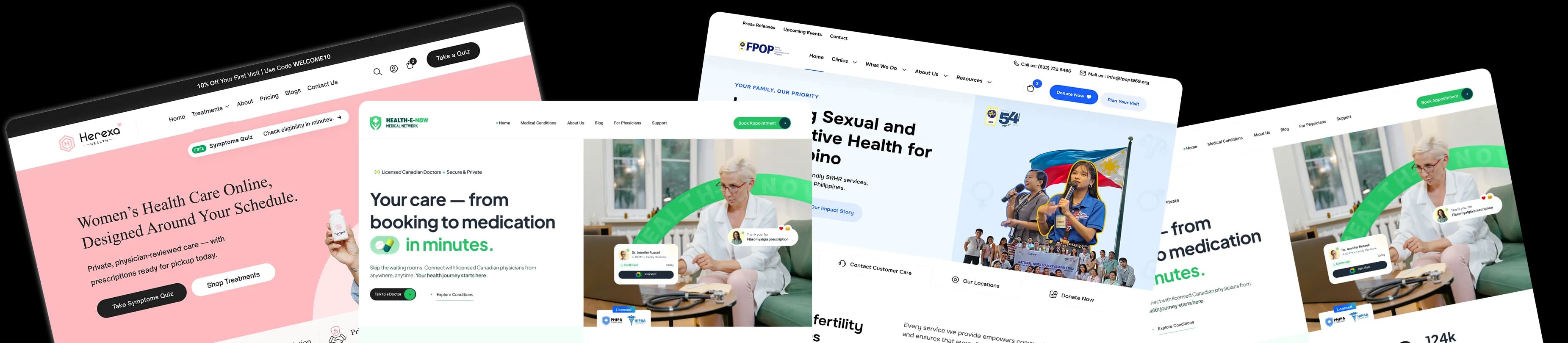
Qrolic Health's work on patient-facing healthcare platforms, including Herexa Health, reflects the importance of separating public website journeys from more sensitive clinical workflows. A fertility clinic should make that distinction explicit in its requirements.
For more detail on form design and data handling, see our guide to HIPAA compliant contact forms.
BAAs for every vendor touching that data
A vendor that creates, receives, maintains, or transmits PHI on behalf of a HIPAA-covered entity may qualify as a business associate. Where required, the clinic must have an appropriate BAA in place.
Review vendors across the entire booking journey, not just the main scheduling application. Depending on the architecture, this may include form processors, hosting providers, messaging tools, patient relationship systems, and other services handling PHI.
Before enabling an integration, confirm:
- Whether the vendor will handle PHI.
- Whether a BAA is available and appropriate.
- Which data the integration sends and receives.
- What access controls and security measures apply.
- Whether the vendor uses the information for any additional purpose.
A signed BAA is not a substitute for technical review. Configure integrations to limit unnecessary data, restrict access, and prevent sensitive information from entering tools that have not been approved for that purpose.
Marketing retargeting and why fertility patient lists need explicit authorization
Marketing technologies can create privacy risks when they receive information about fertility-related activity. Tracking pixels, audience uploads, and retargeting tools should not automatically be added to patient booking or treatment pages.
Do not assume that removing a patient's name makes every disclosure acceptable. URLs, identifiers, event names, and other information may reveal or help infer sensitive treatment interests.
Using fertility patient data to create retargeting audiences or lookalike groups requires careful legal review and explicit patient authorization where applicable under the relevant HIPAA requirements. A BAA alone does not authorise a marketing disclosure.
Keep advertising tools separate from clinical workflows unless a documented review establishes that the intended use is permitted. When in doubt, avoid sending patient-level information to advertising platforms.
UK fertility clinic requirements: HFEA, UK GDPR, and ASA advertising rules
Fertility clinic website GDPR responsibilities differ from US HIPAA obligations. UK clinics must consider the UK GDPR, the Data Protection Act 2018, applicable HFEA requirements, and advertising rules relevant to their services.
The HFEA regulates licensed fertility treatment and storage activities in the UK. Its Code of Practice, ninth edition, published in October 2023, sets standards relevant to clinic practice, consent, and patient communications.
The legal framework also extends beyond the website itself. Treatment and donation information held by the HFEA is subject to the Human Fertilisation and Embryology Act 1990, not just UK GDPR.
HFEA Code of Practice requirements for website advertising and success rate claims
Your website should communicate treatment services and success rates accurately. Avoid presenting clinic-level figures in ways that imply an individual patient has the same probability of success.
The HFEA's published information and licensing details should be easy for prospective patients to verify. Ensure service descriptions and any references to licensing reflect the clinic's actual status and activities.
The HFEA Code of Practice also informs standards for consent and patient communications. Website information should not conflict with the information patients receive during consultation or treatment.
UK GDPR Article 9 and the HFE Act 1990 for treatment and donation data
Under UK GDPR, health information is special category personal data. A clinic must identify an Article 6 lawful basis and a separate Article 9 condition for processing this information.
Fertility treatment may also involve sensitive information about donors, embryos, genetic matters, or reproductive history. Clinics should identify which rules apply to each processing activity and distinguish their own records from information held by the HFEA under the HFE Act 1990.
Your privacy notice should explain what information the clinic collects, why it uses it, who receives it, and how individuals can exercise their rights. Booking and enquiry forms should avoid collecting detailed clinical information before the clinic has established a suitable process.
For practical support, see our UK GDPR and data protection compliance guidance.
The 2021 CMA/ASA/HFEA joint guidance on consumer law and clinic advertising
In June 2021, the Competition and Markets Authority (CMA), Advertising Standards Authority (ASA), and HFEA issued a joint letter to licensed fertility clinics. It confirmed that clinic websites must comply with consumer law and relevant CAP Code advertising standards, including requirements for substantiated success rate claims and non-misleading testimonials.
These advertising obligations operate separately from HFEA licensing requirements. A clinic cannot assume that being licensed means its marketing claims are automatically acceptable.
Review success rate claims for their source, context, and relevance. Explain what a figure represents, avoid implying a guaranteed outcome, and ensure testimonials do not create a misleading impression.
For broader implementation needs, Qrolic Health provides clinic website design and development for healthcare organisations that need their patient journeys and website requirements considered together.
A practical compliance checklist for a fertility clinic website
Use this checklist before launch and whenever you change booking tools, marketing integrations, privacy notices, or treatment services.
US privacy and security checks
- Confirm whether HIPAA applies to your clinic and each relevant data flow.
- Review current HHS OCR guidance on the 2024 reproductive health rule and surviving NPP requirements.
- Identify applicable state reproductive health and consumer health privacy laws.
- Map the information collected by forms, booking tools, and marketing technologies.
- Confirm required BAAs and review vendor access to PHI.
- Review tracking pixels, audience uploads, and retargeting workflows.
UK clinic and advertising checks
- Verify that published HFEA licensing information is accurate.
- Review success rate claims and testimonials against applicable ASA CAP Code standards.
- Check the privacy notice against UK GDPR Article 6 and Article 9 requirements.
- Confirm that patient communications reflect applicable HFEA Code of Practice standards.
- Identify which treatment and donation records fall under the HFE Act 1990 framework.
Development and ongoing review
- Remove unnecessary data fields from consultation and booking forms.
- Test access controls and the routes through which submitted data travels.
- Document decisions about integrations, retention, and disclosure.
- Assign owners for reviewing website claims, privacy information, and vendor changes.
Keep a record of the review date, decisions, and unresolved risks. A checklist only supports compliance when someone owns the follow-up actions.
Conclusion
Fertility clinic website HIPAA compliance requires a current understanding of federal requirements, state privacy protections, vendor relationships, and the data collected through digital patient journeys. The June 2025 court ruling changed the status of most of the 2024 reproductive health privacy rule, but it did not remove existing HIPAA obligations or independent state laws.
UK fertility clinics face a separate framework involving HFEA standards, UK GDPR, the HFE Act 1990, and advertising rules. These requirements need to be reflected in website content, patient forms, booking tools, and marketing integrations.
The strongest approach is to map data flows before development, minimise unnecessary collection, review every vendor, and assign clear ownership for compliance decisions. This helps your team identify risks before they become patient trust or operational problems.
Protect Fertility Data Before Your Next Website Launch
Fertility websites handle sensitive patient information across clinical, booking, and marketing workflows. Qrolic Health can help review your website architecture, form design, vendor integrations, and patient-facing journeys against your requirements.
Talk to our compliance team →Frequently Asked Questions
Is fertility treatment data protected under HIPAA?
Yes, identifiable fertility treatment information held by a HIPAA-covered entity may qualify as PHI. However, the 2024 reproductive health rule's core prohibition was vacated in 2025, while existing HIPAA obligations and applicable state laws remain relevant.
What does the HFEA require fertility clinics to show on their website?
Clinics should make licensing information verifiable and ensure website communications reflect applicable HFEA standards. Success rate claims and testimonials must also comply with relevant consumer law and ASA CAP Code advertising requirements.
Do state laws protect reproductive health data separately from HIPAA?
Yes. California, Washington, Illinois, and New York have enacted protections that may apply independently of HIPAA. The precise obligations depend on each law's scope and the clinic's activities, so assess applicability individually.
Is a fertility clinic booking form a HIPAA risk?
It can be. Identifiable information linked to fertility consultations or treatment may qualify as PHI when handled by a covered entity. Review the form's fields, data routing, vendor agreements, and security controls before launch.
Can a fertility clinic use patient success stories on its website?
Potentially, but clinics must assess applicable privacy and advertising requirements. In the US, a HIPAA-covered clinic may need valid patient authorization for a disclosure. UK clinics must also consider data protection and advertising standards.
What is the HFEA Code of Practice, and does it affect a clinic's website?
The HFEA Code of Practice sets standards relevant to licensed fertility providers, including consent and patient communications. Website content should reflect those standards and comply separately with applicable consumer law and advertising requirements.
Does retargeting advertising breach HIPAA for fertility clinics?
Retargeting is not automatically a HIPAA violation in every situation, but disclosing PHI to advertising platforms can create serious compliance concerns. Patient-level audience creation requires careful review and explicit authorization where applicable, not a BAA alone.

Qrolic Health Technical Team
Updated for 2026 Compliance Guidance
Qrolic Health applies healthcare IT experience to patient data workflows, healthcare website architecture, and the technical decisions that support privacy and compliance.
Ready to Build Your Healthcare Platform?
Work with a team that understands HIPAA, accessibility, and healthcare digital experiences from day one.
Private GP Clinic Website Requirements UK: What You Must Get Right
Urgent Care Center Website Design: Features, Security, and Performance
An urgent care website must help patients find the right location, understand available services, and start check-in quickly. Learn how to plan wait-time displays, secure integrations, mobile performance, accessibility, and ongoing website management.